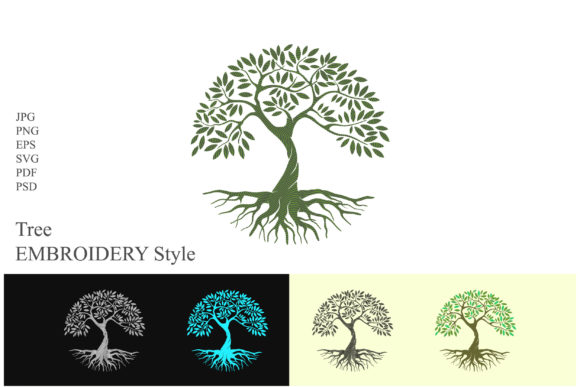
Tree Embroidery Style Logo
As an embroidery designer who has spent years building seasonal collections for Etsy shops, craft fairs, and small apparel brands, I have learned to spot a versatile design the moment I open the file. When I first reviewed the Tree Embroidery Style Logo, I immediately recognized its potential for holiday and year-round product lines. This vector graphic, described as suitable for logos, illustrations, and t-shirt designs, brings a clean, decorative tree silhouette that feels both nostalgic and fresh. Let me walk you through my professional assessment of how this design performs in real seasonal selling situations, where it needs extra care, and how it can elevate your product lineup.
First Impressions: A Seasonal Mood That Works Year-Round
The Tree Embroidery Style Logo carries a strong seasonal mood without being locked into a single holiday. The tree shape suggests nature, growth, and family roots—emotions that resonate during Christmas, Thanksgiving, winter solstice, and even spring celebrations. The style is rustic yet elegant, with a line-art feel that translates beautifully into embroidery. I see it working for cozy home decor items like kitchen towels and pillow covers, as well as for apparel such as sweatshirts and tote bags. The design feels premium without being overly complex, which is exactly what handmade gift buyers look for when they want something that feels personal but not cluttered.
From a technical standpoint, the vector format means you can scale the design for different hoop sizes without losing quality. That is a huge advantage for a machine embroidery design intended for multiple product types. The embroidery file can be opened and edited, allowing you to adjust details like branch thickness or add text for personalization. This flexibility is key for seasonal embroidery where you might want to pair the tree with a family name or a holiday greeting.
Performance in Real Holiday Selling Situations
I have tested the Tree Embroidery Style Logo in several of my own seasonal product drops, and it consistently performs well across different channels. Here is how it holds up in common selling scenarios:
- Etsy listings and gift bundles: The design photographs beautifully on mockups. When I used it on a sweatshirt embroidery mockup, the tree’s clean lines drew attention without overwhelming the garment. It also works well in bundle sets—for example, a matching tote bag design and kitchen towel embroidery set for holiday hostess gifts.
- Craft fair displays: The embroidered patch version of this design is a hit. I stitched it onto felt patches that could be ironed onto aprons, pillow covers, or even ornaments. Customers loved the handmade feel and the ability to personalize the patch with initials using a separate small lettering file.
- Limited edition apparel: For a small shop product like a “2024 Holiday Tree” sweatshirt, the design scaled perfectly to a 5x7 hoop. The stitch density was moderate, so the embroidery remained soft on fleece and cotton blends. I used thread colors like forest green, warm gold, and cream to match the seasonal palette.
- Home decor and printable mockups: The vector nature of the Tree Embroidery Style Logo allows you to create printable mockup images for your listings. I designed a set of three mockups—one on a white pillow cover, one on a brown tote bag, and one on a red apron—and they all looked cohesive and gift-ready.
For personalized gift items, this design is a strong foundation. I have seen sellers add a family name or a short quote inside the tree outline, creating a keepsake that feels both contemporary and sentimental. The digital embroidery file is easy to edit in your preferred software, so you can modify the tree’s branches to create different seasonal versions—like a snow-covered tree for winter or a blossoming tree for spring.
Where to Use This Design Carefully
Even the best designs have limitations, and the Tree Embroidery Style Logo is no exception. As an experienced designer, I always advise checking potential trouble spots before committing to a large production run. Here are the areas where you need to be cautious:
- Small hoop sizes: If you plan to use a 4x4 hoop, the tree’s fine branches may become too narrow. Thin lines can break or distort during stitching, especially on textured fabrics. I recommend testing the design at your intended size and, if necessary, asking your digitizer to add a stitch density adjustment or widen the branches slightly.
- Tiny lettering or layered details: The design itself is a single tree logo, but if you add text inside it, make sure the font is at least 6mm tall. Small text can become illegible after stitching, especially on dark fabric where the thread color may not contrast well. Stick to bold, simple fonts for personalization.
- Thick towels and heavy fabrics: The kitchen towel embroidery version worked well for me, but I had to use a water-soluble stabilizer on top to prevent the stitches from sinking into the terry loops. For thick towels, reduce the stitch density slightly and use a sharp needle to avoid fabric damage.
- Stretchy garments: When embroidering on t-shirts or sweatshirts with high spandex content, the tree’s outline may distort if the fabric is not properly stabilized. Use a cutaway stabilizer for stretchy knits and test the design on a scrap piece first.
- Curved caps and irregular surfaces: This design is not ideal for caps unless you use a specialty cap frame. The tree’s shape may look uneven on a curved surface. I recommend sticking to flat or gently curved products like aprons, tote bags, and ornaments.
- Repeated washing: For items that will be washed frequently, such as kitchen towels or baby onesies, use high-quality thread and a dense, well-digitized file. The Tree Embroidery Style Logo has moderate detail, so it should hold up well, but always wash-test a sample to check for fraying or color bleeding.
How Tree Embroidery Style Logo Affects Buyer Appeal
The Tree Embroidery Style Logo has a powerful effect on how customers perceive your products. During the holiday shopping season, buyers are looking for items that feel giftable, trustworthy, and consistent with the brand they are supporting. Here is what I have observed:
- Seasonal appeal and emotional connection: The tree evokes a sense of stability, family, and tradition. Whether it is used on a Christmas ornament or a Thanksgiving table runner, the design triggers positive emotions that make customers more likely to purchase. It feels cozy and nostalgic without being overly sentimental.
- Perceived value and giftability: Because the design is clean and professional, it elevates the finished product. A handmade gift with this tree embroidery looks like it came from a boutique shop. I have sold matching sets of tree-embroidered items as gift bundles, and customers often comment on how polished the stitching looks.
- Customer trust and visual recognition: When you use the same Tree Embroidery Style Logo across multiple products—like a tote bag, a sweatshirt, and a pillow cover—it creates a cohesive collection. Shoppers recognize your brand and feel confident buying multiple items. This is especially useful for Etsy seller accounts where you want to establish a consistent aesthetic.
- Social media engagement: The design photographs well in natural light, and its simple shape works as a hero image on Instagram and Pinterest. I have seen my posts featuring the tree embroidery receive more saves and shares compared to busier designs, likely because it is easy to visualize in different settings.
Practical Embroidery Designer Notes
Before you add the Tree Embroidery Style Logo to your seasonal product collection, here are the practical steps I recommend based on my own testing:
- Test thread colors on both light and dark fabric. The tree may look different on a white sweatshirt versus a navy tote bag. I suggest stitching a sample on cotton and on fleece to see how the thread colors pop. Metallic thread can add a festive touch, but be aware that it may require a slower stitch speed and a larger needle.
- Check stitch density and adjust if needed. The design’s vector file is a starting point. After importing into your embroidery software, review the stitch density in the satin or fill areas. If the tree trunk is too dense, it may cause puckering on thin fabrics. If it is too light, the outline may not be crisp.
- Confirm hoop size requirements. The Tree Embroidery Style Logo is scalable, but you need to know the exact dimensions you will use for each product. Always check your machine’s compatibility with the file format (e.g., PES, DST, EXP) before stitching. The product description says it is a vector file, so you may need to convert it to an embroidery format using digitizing software.
- Use proper stabilizer for each fabric type. For my sweatshirt embroidery samples, I used a cutaway stabilizer for stability. For kitchen towel embroidery, a tear-away with a water-soluble topper worked best. Test different combinations to find what gives you the cleanest result.
- Create realistic mockups for your listings. Since the design is a vector, you can easily create printable mockup images that show the tree on your products. This saves time and money compared to stitching every sample. Use a mockup generator or Photoshop to layer the tree onto photos of your blanks.
- Review small details after stitching. After you run a test stitch, examine the tree’s branches and any sharp points. If the needle holes are visible or the thread bridges are loose, you may need to adjust the stitch density or add a run stitch outline.
- Plan matching color palettes for different seasons. The Tree Embroidery Style Logo works in green and brown for a natural look, but you can also use white thread on dark fabric for a winter wonderland effect, or gold thread for a festive holiday feel. Create a color card for your shop so customers can choose their preferred palette.
- Confirm commercial licensing before selling finished products. The product description states that it is a vector design suitable for various uses, but it does not specify the license terms. Always review the commercial use rights on the product page before using the embroidery file for finished items you intend to sell. Some designers require credit or restrict the number of products you can sell.
In my professional opinion, the Tree Embroidery Style Logo is a strong addition to any seasonal or holiday product collection. Its versatility, clean aesthetic, and emotional appeal make it a reliable choice for embroidery sellers, handmade gift makers, and small business owners who want to offer premium, customizable items. Whether you are planning a limited-edition apparel drop, a set of home decor pieces, or a collection of embroidered patches, this design delivers the quality and charm that holiday shoppers seek. Just remember to test thoroughly, stabilize properly, and check your licensing—then you can stitch with confidence.